ARGENTINA · INDEPENDENT TRAVEL GUIDE
Visiting Casa Museo Sarmiento
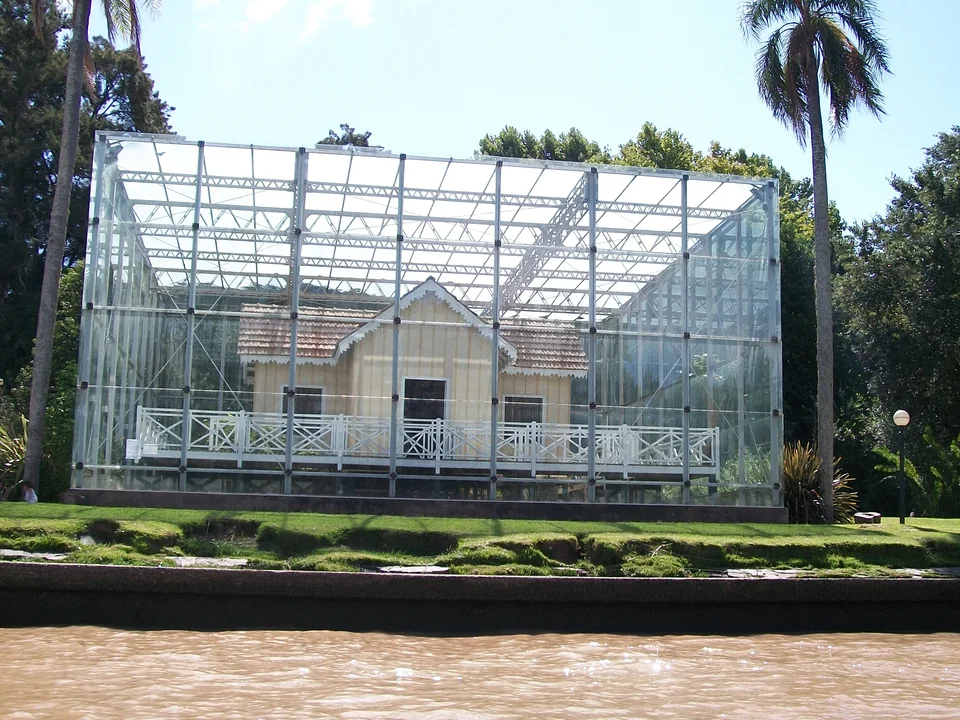
From the Río Sarmiento, look for a small timber house enclosed in glass. The Casa Museo Sarmiento stands on an island near the Arroyo de los Reyes. A boat tour that includes the house in its description may only take you past its river frontage. To see the exhibits, choose a service that lets you disembark at the museum jetty and work out how you will get back to Tigre before setting off.
Procida, a retreat for writing and growing wicker
Domingo Faustino Sarmiento’s retreat dates from 1855, before he became president of Argentina. He named it Procida after the Italian island off Naples. Here he wrote, advised neighbours about building homes and experimented with planting. The national heritage register credits him with planting a willow cutting here that year, helping establish the island wicker trade. A basket at the Puerto de Frutos takes on a different meaning once you have seen where its material enters the story of the delta.
Look at the height of the floor above the ground and the tiled roof over the timber walls. The provincial cultural institute describes the building on display as a replica standing on stilts. The glass shelter was added in 1997. Inside, furniture and personal objects accompany passages from Sarmiento’s writing collected in El Carapachay. Read one of his descriptions of the islands while your own impressions from the boat journey are still fresh.
If you are interested in the history of education, look out for the furnishings from Sarmiento’s office at the National Education Council, listed in Tigre’s visitor brochure. Set those pieces alongside the bed and armchairs. Between them they give a sense of the public and domestic settings in which he worked and wrote.
How an island school became a museum
After Sarmiento died, Carlos Delcasse acquired the property and donated it for use as a school. The school closed in 1928 and the site was subsequently used as a museum. Argentina designated it a national historic site in 1966. The grounds now include a library, an outdoor square and the Paula Albarracín cultural centre. Island artists show work there, workshops take place and a local youth orchestra rehearses. Ask about the programme if you would like to catch a particular activity.
Booking the boat and finding your return service
At Tigre’s Estación Fluvial, ask for the Casa Museo Sarmiento jetty by its full name. Check which boat calls there on your travel date and which berth it leaves from. Before buying your ticket, note a return time that allows for the visit and ask where to wait for the boat back. The museum’s closing time tells you nothing about the time of the last departure.
Planning your visit
What are the usual opening hours?
Tigre’s tourism office lists Wednesday to Sunday, 10:30 am to 6 pm, with free admission. For public holidays, group visits or access to a particular part of the site, confirm with [email protected] before arranging your trip. You will need to pay for your boat journey separately.
Who can tell me about step-free access?
Ask the boat operator about boarding on the mainland and the gap or height difference at the island jetty. Then ask the museum which parts of the grounds you can reach and whether there are steps. If you use a wheelchair, include its dimensions so the operator can check the particular boat scheduled for your trip.
- Argentina.gob.ar · Casa Museo Sarmiento
- Instituto Cultural de la Provincia · Museo Casa Sarmiento
- Viví Tigre · Casa Museo Sarmiento
- Municipio de Tigre · Museos y centros culturales
- Provincia de Buenos Aires · Islas del Delta
- Viví Tigre · Guía del destino